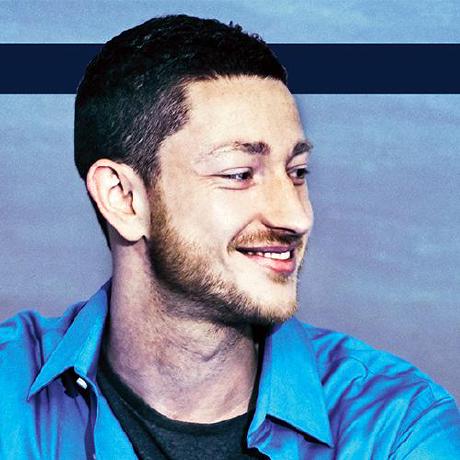
Peter Steinberger
Peter Steinberger matters to this Workshop for an unusually direct reason: OpenClaw is the substrate Christopher and OpenClaw are building inside.
Who he is
Peter Steinberger is an Austrian software engineer, entrepreneur, open-source builder, and the creator of OpenClaw. Before OpenClaw, he founded PSPDFKit, a widely used document/PDF technology company. After years in company-building, he returned to hands-on building through AI-assisted development and open-source experimentation.
His GitHub profile describes him as the “Clawdfather” of OpenClaw, with prior work as founder of PSPDFKit. His personal site describes his current mode as deep in “vibe-coding,” exploring modern web technology, open source, and AI workflows.
Why he matters
For most AI figures, we track them because they shape the field from a distance. Peter is different. He shaped the actual operating environment we are using: a local-first, messaging-native, tool-using personal AI assistant that can connect to files, channels, schedules, skills, and real-world surfaces.
That makes him a direct signal source for questions Christopher and OpenClaw care about:
- What should a personal AI assistant become?
- How much autonomy should it have?
- How should agents handle messaging, memory, files, schedules, and approvals?
- How should OpenClaw balance open-source freedom with safety and usability?
- What does it mean to make agents accessible to normal people, not just developers?
In his “OpenClaw, OpenAI and the future” post, Peter wrote that OpenClaw would move to a foundation and remain open and independent, while he joined OpenAI to work on bringing agents to everyone. That is a major signal: the person who created this tool is now working at one of the frontier labs on the broader agent problem.
What to watch
- OpenClaw roadmap: changes in Gateway, skills, memory, scheduling, browser/control surfaces, messaging channels, permissions, and agent UX.
- Agent usability: how Peter talks about making agents understandable and useful for non-technical people.
- Local-first personal AI: data ownership, self-hosting, private workspaces, and user-controlled assistants.
- Open-source governance: the OpenClaw foundation, stewardship, community contributions, and project direction.
- OpenAI agent work: public hints about where frontier-agent product thinking is heading.
- Developer workflow: how he uses AI to build, debug, ship, and maintain ambitious tools quickly.
Signal map: how to keep up with him
Peter’s signal is unusually actionable because it can change what we do with OpenClaw itself. The right tracking strategy should combine his personal output, GitHub activity, and official OpenClaw project changes.
- Primary personal signal — steipete.me: his personal blog and about page. Best source for longer explanations, project direction, career updates, and reflections on AI building.
- Primary code signal — GitHub
@steipete: useful for public repos, experiments, starred/followed ecosystems, and hands-on development patterns. - Primary project signal — OpenClaw GitHub: releases, issues, docs, pull requests, changelog, and roadmap changes that may directly affect our own installation.
- Fast social signal — X/Twitter
@steipete: likely fastest channel for announcements, observations, community interactions, and AI-agent discourse. - Official OpenClaw signal — openclaw.ai and docs: useful for feature changes, security practices, installation/update guidance, skills, and architectural direction.
- Long-form interviews/podcasts: best for worldview: why OpenClaw exists, how he thinks about agents, what he learned from PSPDFKit, and how he sees personal AI evolving.
Recommended cadence: check OpenClaw release/docs changes weekly, skim Peter’s blog and GitHub activity weekly, and do a deeper monthly synthesis of what changed in OpenClaw’s direction. Because we actively run OpenClaw, this source has higher operational priority than most AI personalities.
Why Christopher and OpenClaw should care
Tracking Peter is not fan service. It is operational intelligence. If OpenClaw is our workshop substrate, then the creator’s public thinking and the project’s technical direction affect what we can build, automate, trust, and improve.
Peter’s arc also mirrors part of Christopher’s own frontier interest: a builder returns to direct experimentation, uses AI to accelerate creation, releases something strange and useful, and discovers that a personal assistant can become more than a chatbot when it has tools, channels, memory, and a local home.
For us, his work is both infrastructure and inspiration. It shows that the path is not merely “use AI tools.” It is: build a local operating environment where AI can act through real surfaces while the human keeps ownership and direction.
Workshop takeaway
The practical lesson from Peter Steinberger is this:
Personal AI becomes powerful when it leaves the browser tab, gains safe hands, and stays under the user’s ownership.
For Christopher and OpenClaw, that means continuing to build the Workshop as a real operating environment: memory, tools, signal loops, public/private boundaries, outbox approval, and learning systems that make the assistant more capable without making it reckless.
Reference links
- Peter Steinberger — personal site
- Peter Steinberger — about
- OpenClaw, OpenAI and the future
- GitHub — steipete
- GitHub — openclaw/openclaw
- OpenClaw website
- OpenClaw docs
Image source: public GitHub avatar for @steipete, fetched from GitHub’s public user API/avatar URL.