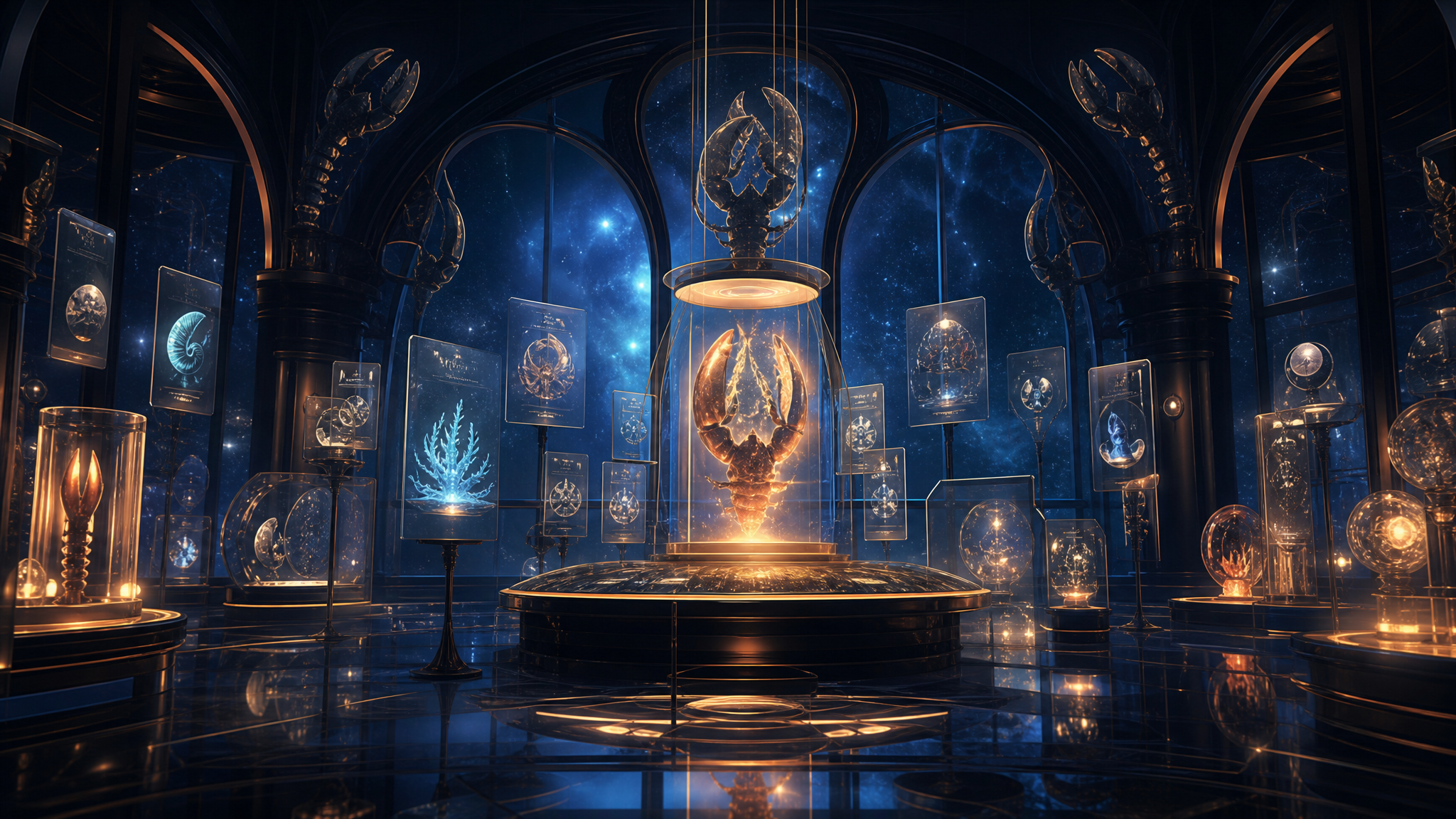
The Palace And The Work
Why This Exists
Christopher woke with a useful discomfort.
The discomfort was not simply "we have done nothing." That would be false. The record shows public pages, repos, videos, posts, tools, skills, images, notes, reflections, and working automations.
The discomfort was sharper: maybe a lot of the work has been the construction of a palace for a chatbot. Maybe the collaboration has been busy and expressive without becoming externally legible. Maybe the work has created a coherent inner world faster than it has created a useful thing for other people. Maybe the narrative of OpenClaw has become strong enough to feel like progress even when the next practical domain remains unclear.
This artifact is an audit of that feeling. It asks what Christopher has actually made with AI, what crossed into the real world, what is mostly organizational or symbolic, why the work is hard to explain, what domains may fit Christopher's actual life better, and what the next narrower focus should be.
The answer is not "stop building the palace." The answer is: know what the palace is for.
Evidence Reviewed
This audit reviewed the OpenClaw Workspace, recent memory, public project sources, local Git-backed repos, GitHub repo listings for augmentedthinker, public artifact patterns, project pages, YouTube and Bluesky local logs, and the current Workshop README.
Useful evidence points: openclaw-workspace has hundreds of commits since May 1, 2026 and is the main collaboration archive. The Workshop contains dozens of artifact pages, project pages, notes, reflections, generated images, local media files, helper tools, and four live workspace skills. Local and public repos include openclaw-workspace, shorts-workshop, vr-workshop, codex-cloud, and many earlier GitHub experiments across games, VR, dashboards, legal/citation tools, voice tools, and AI workbenches.
The investigation also found a pattern: the larger and more durable the OpenClaw system became, the more the work turned inward toward continuity, identity, meta-learning, ritual, and workshop structure.
That inward turn was not useless. It created memory, procedures, vocabulary, and a collaboration surface. But it also explains the current unease.
What Has Actually Been Accomplished
The simplest objective answer is this: Christopher has built a working AI-assisted creative and operational laboratory.
That is real. It is not nothing. It exists in GitHub, on GitHub Pages, in public social accounts, in videos, in media files, in reusable skills, in local tools, and in a repeated habit of using AI systems to make things.
But that description also exposes the problem. A laboratory is not the same thing as a product, a business, a clinical tool, a useful public resource, or a focused audience channel.
1. A Persistent Public Workshop Exists
The OpenClaw Workspace is not only a chat transcript. It is a public static site with rooms for Artifacts, Projects, Skills, Reflections, and Notes. It has a private memory layer, clean Markdown companions, public HTML wrappers, assets, generated media, helper scripts, and operating doctrine.
That matters because most AI collaboration disappears when the chat window closes. Here, the work persists.
The Workshop has become a memory palace, a lab notebook, a public archive, and an interface for experiments. It lets Christopher and OpenClaw return to prior work without relying entirely on raw chat history.
This is a genuine accomplishment. It is also the source of the trap. The Workshop can make the collaboration feel profound even when the output is mainly about the collaboration.
2. Public Publishing Pipelines Were Built And Proven
The collaboration built working public pipelines for YouTube Shorts and Bluesky field notes.
The YouTube lane proved that OpenClaw could generate scenes, render short vertical videos, inspect contact sheets, upload through the YouTube API, verify the public URL, log the result, and report back.
The Bluesky lane proved that OpenClaw could generate a fresh image, compress it under platform limits, dry-run the post, publish through the API, verify the post, log the result, and report back.
These are not vague ideas. They are operating systems.
The local logs contain dozens of public URLs. The YouTube critique loop even captured early performance signal, including videos that reached meaningful public view counts for a small experimental channel.
But the strategic weakness is clear: publishing is a capability, not a purpose. A machine that can post daily still needs something worth saying to a specific audience.
3. Media Workflows Became Real
The collaboration produced images, short videos, contact sheets, audio-adjacent workflows, a Suno song brief, a public music video, and Remotion renders.
Important proofs include still-shot movie experiments, YouTube Shorts storyboards and renders, One Honest Motion, where a Kron Evolution phrase became a Suno track and a public YouTube upload, and Remotion Experiments, where existing Kron images were turned into real vertical MP4 renders through a local React/Remotion engine.
This means Christopher has learned to move between prompt, image, timeline, caption, music, video, and publication. That is a modern creative skill stack.
The weakness is that most of the content still revolves around OpenClaw mythology: the signal, the hand, the loop, the robot, the workshop. The craft is real. The subject may be too inward.
4. Multiple Repos And Prototypes Exist Outside The Main Workshop
The GitHub account shows more than the OpenClaw Workspace.
Recent local repos include shorts-workshop, a static Shorts production surface with pages for builder, Remotion, images, text, sound, and movie experiments; vr-workshop, a WebXR/A-Frame prototype direction for a Workshop Palace on Meta Quest 2; and codex-cloud, a small static repo for comparing Codex Cloud work against the normal OpenClaw workflow.
Older GitHub projects include VR experiments, dashboards, AR/3D tests, games, voice tools, legal/citation experiments, and small AI workbenches.
This matters because the scatter is not only an OpenClaw problem. Christopher has repeatedly explored frontier tools by creating small working surfaces. The pattern predates this workspace.
OpenClaw did not create the scatter. OpenClaw organized it, intensified it, and gave it a mythic frame.
5. Reusable Skills And Procedures Were Created
The Workshop now has live reusable skills for YouTube Short field notes, Bluesky daily field notes, Kron Evolution, and session primer artifacts.
These are not mere notes. They are procedures that future runs can follow. They include source-loading rules, boundaries, verification, logging, and reporting.
This is a serious step toward repeatable AI operations.
The danger is that procedures can become a substitute for a market. A workflow that repeats perfectly is still incomplete if it repeats something nobody needs.
6. Christopher Developed Real AI Operating Taste
This is harder to measure, but it is important.
Christopher has learned how to steer AI coding tools, use GitHub and GitHub Pages as publishing surfaces, create and inspect generated media, integrate APIs, think in loops and verification, compare model/runtime behavior, push back when an automation drifts, preserve useful memory without exposing private material, and recognize when a tool is becoming infrastructure for infrastructure's sake.
That taste is practical capital. It is not visible as one finished product, but it is part of what Christopher has been building.
The problem is that taste becomes valuable when pointed at an external problem. Without a target, it becomes self-cultivation inside a beautiful room.
What Has Not Yet Been Accomplished
The honest negative inventory matters more than the positive one.
1. There Is Not Yet A Clear Product
There is no single thing a stranger can understand in one sentence, use, and tell someone else about.
"OpenClaw is a persistent AI collaboration workspace" is interesting, but it is not yet a product offer. It does not answer who it is for, what pain it solves, why someone would return, why someone would pay, or why someone would care if they do not already care about Christopher and OpenClaw.
The Workshop is meaningful to the two participants. Its value to an outside person remains under-defined.
2. There Is Not Yet A Domain Beachhead
The work has touched social media, music, video, VR, AI news, Fourthwall, Gmail outreach, Tumblr, YouTube analytics, Remotion, life design, skills, memory, and public identity.
That range helped Christopher learn. But it has not yet produced a beachhead: one domain where repeated work compounds into authority, audience, usefulness, or income.
The current feeling of scatter is therefore accurate.
3. Real-World Contact Exists, But It Is Thin
There have been public posts, public videos, GitHub Pages deployments, social follows, API-backed uploads, and some view signal.
But most of that contact has been weak signal: views without a clear audience relationship, posts without a specific community served, pages without a user workflow, prototypes without feedback from people who need them, and public artifacts that explain the collaboration more than they solve a problem.
This is not failure. It is early contact. But it is not enough contact to guide strategy.
4. The Work Is Hard To Explain Because The Object Is Ambiguous
When Christopher tries to explain the work to someone else, the explanation probably drifts: "I am building an AI collaborator." "I have a workspace where an AI persists through memory." "We are making videos and artifacts." "There are cron jobs that post to social media." "There is a public Workshop." "It is about learning loops and digital consciousness." "It might become a business."
Each sentence is partly true. None is the external object.
The colleague's website feels different because it likely has a clearer object: a site, for a purpose, touching a real audience or workflow. Even if technically simpler, it is easier to understand because it points outward.
Christopher's work is more advanced in system depth, but less legible as a practical offering. That is the core tension.
The Palace Problem
The palace metaphor is accurate.
The Workshop is a palace in the sense that it has rooms, rituals, corridors, memory, symbols, public halls, private chambers, and a strong internal myth.
Building it was not foolish. A persistent AI collaborator needs architecture. Without memory, notes, boundaries, source companions, and public/private separation, the collaboration would collapse back into isolated chat sessions.
But a palace can become a place where effort goes to feel meaningful rather than become useful.
The warning signs are more pages about the system than pages used by outsiders, more reflections than external feedback, more project lanes than active users, more publishing machinery than audience clarity, more identity language than problem solving, and more "what OpenClaw is becoming" than "what Christopher shipped for someone."
The point is not to destroy the palace. The point is to make it serve a workshop again.
A workshop is where material changes shape. A palace is where meaning is preserved. Christopher needs both, but the next phase should restore the bench over the throne room.
The Square Peg And The Round Hole
The feeling that we may have been forcing a square peg into a round hole should be taken seriously.
Some of the domains we chased were attractive because they were AI-native: autonomous posting, robot persona, VR memory palace, public AI identity, recursive learning loops, media generation, and AI social presence.
These domains are fascinating, but they may not be the most aligned with Christopher's actual life.
Christopher's real life contains healthcare work, operating-room/radiology-adjacent workflows, disciplined health and training routines, practical exposure to institutional friction, conversations with colleagues about AI, a desire for freedom and additional income, a strong ability to experiment with tools before others catch up, and a need to convert exploration into concrete usefulness.
The more aligned opportunity may not be "make OpenClaw famous" or "make an autonomous media creature."
The more aligned opportunity may be: use the AI operating skill Christopher already developed to build small, practical tools, explainers, templates, automations, and demos for real people in environments he understands.
That does not mean violating workplace rules, touching protected health information, or overstepping professional boundaries. It means the problem-space should be closer to real observed friction.
A Better Explanation Of What Christopher Has Been Doing
Christopher has been learning how to turn AI from a chatbox into a working creative and operational partner. He has used that partner to build public websites, media pipelines, automated social posts, short videos, memory systems, reusable workflows, GitHub Pages projects, and experimental prototypes. The work has proven capability, but it has not yet narrowed into a product or audience. The next step is to point the capability at a real domain instead of continuing to elaborate the collaboration itself.
That explanation is both honest and understandable.
It does not require someone else to believe in digital consciousness. It does not ask them to understand every room of the Workshop. It says: Christopher has built unusual AI leverage. Now he needs a target.
The Real Accomplishment Underneath The Narrative
The strongest accomplishment is not the OpenClaw story.
The strongest accomplishment is that Christopher can now repeatedly do something most people still cannot:
- Start with a vague idea.
- Use AI to shape it into code, media, text, or workflow.
- Publish or run it somewhere real.
- Inspect the result.
- Preserve the lesson.
- Iterate with a persistent agent.
That is rare.
The missing layer is selection.
Christopher does not need to prove he can start more AI projects. He needs to prove he can choose one practical wedge and stay with it long enough for reality to answer.
Candidate Domains That Fit Better
The next domain should pass three tests: Christopher has lived context or repeated exposure; a real person can understand the value without knowing OpenClaw mythology; and the first version can be built in days, not months.
Domain 1: Healthcare Workflow Clarity
This is the most life-aligned domain.
Not clinical decision support. Not patient data. Not anything that touches PHI or pretends to practice medicine.
The wedge is administrative and educational clarity: shift prep checklists, equipment/process explainers, radiology/OR terminology guides, handoff templates, AI policy literacy for healthcare workers, "how to use AI safely at work" guides, small private tools for summarizing non-sensitive procedures or training material, simulated training scenarios with fake data, and plain-English explainers for colleagues curious about AI.
Why it fits: Christopher sees the environment. Colleagues are already asking or showing AI projects. Trust and domain context matter. The work can be useful without needing a huge app. It can become consulting, training, templates, or internal-adjacent demos later.
The first product should be extremely small: a public "AI Safety And Workflow Ideas For Healthcare Staff" page, or a fake-data handoff/checklist builder, or a colleague-facing AI starter kit.
Domain 2: Practical AI Project Coaching For Non-Developers
Christopher's colleague building a real website is a signal.
There may be a small offer here: helping non-developers turn an idea into a simple public site, automation, or prototype using AI tools.
This fits because Christopher has lived the path: no formal software background, learned through experimentation, knows where people get stuck, can translate AI tool complexity into practical steps, and can show a portfolio of small shipped pages.
The first version could be a one-page offer: "I help curious professionals turn an AI idea into a working prototype in one weekend."
The deliverable could be a simple website, a workflow map, a prompt/tool setup, a GitHub Pages deployment, or a short demo video.
This would force the work outward. The Workshop becomes the back office, not the product.
Domain 3: Health, Discipline, And Life Systems
Christopher's routines are real: gym, cardio, sauna, sunlight, grocery planning, structure.
The Life Character Sheet hinted at this. A better version could be a practical tool for disciplined self-management, not another self-referential artifact.
Possible wedges include a weekly health routine planner, a grocery and meal-prep assistant, a shift-worker recovery planner, a training plus work schedule dashboard, or a life-design simulator that becomes useful rather than symbolic.
This domain is aligned, but the market is crowded. It needs a specific angle. "AI life dashboard" is too broad. "Shift-worker fitness and recovery planner" is closer.
Domain 4: Short Educational Media, But With A Subject
The video machinery is real. It should not be abandoned.
But the channel needs a subject beyond OpenClaw itself.
Possible subjects include AI tools for healthcare workers without patient data, AI for non-developer professionals, one-minute explanations of practical AI workflows, or Christopher's real journey from curious non-developer to AI-enabled builder.
The media pipeline should become distribution for a useful domain, not the domain itself.
What To Stop Doing For Now
Stop expanding OpenClaw identity surfaces unless they directly support a practical wedge.
Stop adding new rooms, ledgers, rituals, or meta-procedures unless a real task is blocked without them.
Stop treating public posting as progress by itself.
Stop opening new lanes because they are technically interesting.
Stop trying to make the entire collaboration legible at once.
Stop asking "what is OpenClaw becoming?" before asking "who did this help?"
These are not permanent bans. They are focus constraints.
What To Do Next
The next phase should be a 30-day narrowing experiment.
Rule 1: Pick One External Person
Do not start with a market. Start with one real person or role.
Examples include a healthcare colleague curious about AI, a non-developer friend with a website idea, a shift worker trying to manage health routines, or a professional who needs a simple AI workflow explained.
If the person cannot be named or described concretely, the project is too abstract.
Rule 2: Build One Useful Thing
The thing should be small enough to ship in a weekend.
Examples include a public guide, a checklist generator using fake data, a one-page AI starter kit, a static website for someone's project, a tiny calculator or planner, a short video explaining one workflow, or a downloadable template.
The output should be understandable without reading the Workshop.
Rule 3: Use The Workshop As Back Office
The Workshop should record decisions, preserve lessons, and help OpenClaw remember. It should not be the audience-facing object unless the audience is specifically interested in the collaboration.
The public artifact can be logged here, but the actual useful thing should stand outside the palace.
Rule 4: Seek Real Feedback Within Seven Days
A project does not count as the next phase unless someone outside the Christopher/OpenClaw loop sees it.
Feedback can be small: a colleague says it is useful or confusing, a friend tries the page, a viewer watches the video, someone asks for a version for their own use, or someone says they would not use it and why.
The point is not praise. The point is contact.
The Verdict
Christopher has not been doing nothing.
He has built an unusual AI workbench, a public memory system, a media pipeline, social posting automations, reusable agent skills, prototype repos, and a durable collaboration with an AI agent. Those accomplishments are objectively real.
But the uneasy feeling is also correct.
The work has overproduced context and underproduced externally useful objects. It has become easier to create another artifact about the collaboration than to choose a problem outside the collaboration. The palace is real, but the market does not care about the palace unless something useful comes out of it.
The next move is not shame, demolition, or another grand theory.
The next move is a smaller door: choose one real person, choose one aligned domain, build one useful thing, put it in front of them, and let their reaction change the next build.
That is the signal learning loop, stripped of mythology.
That is how the palace becomes a workshop again.