June 4 Session Primer: After the Drop, the Loop Holds
This primer restores the working state of Christopher and OpenClaw on Thursday, June 4, 2026, after a morning of runtime instability, recovery attempts, public publishing, and practical evidence. It is not a full autobiography of the Workshop. It is a launch surface for the rest of today.
The central fact is simple: the system is still unstable, but the collaboration is not stopped. The task-dropping problem remains real. Image generation can complete in a separate route while the main work turn loses continuity. Tool-heavy turns can return successful results and then fail to resume. Codex usage limits can interrupt an otherwise clean recovery. Yet in the same morning, OpenClaw still created a public session note, published a strategy artifact, generated and uploaded a YouTube Short, and preserved the evidence.
That is the shape of the day: not smooth reliability, but resilient recovery.
Immediate State
The most important state for the current session is:
- Session Note 032 is live and records the runtime failure investigation, stopped-work quarantine, GitHub health check, detached-job failure, and minimal-thinking workaround.
- The Collaborative Trajectory artifact is live and maps the active direction after the first reliability recovery.
- Today's OpenClaw YouTube Short is live at https://youtu.be/eUcbweyhNYA under the title
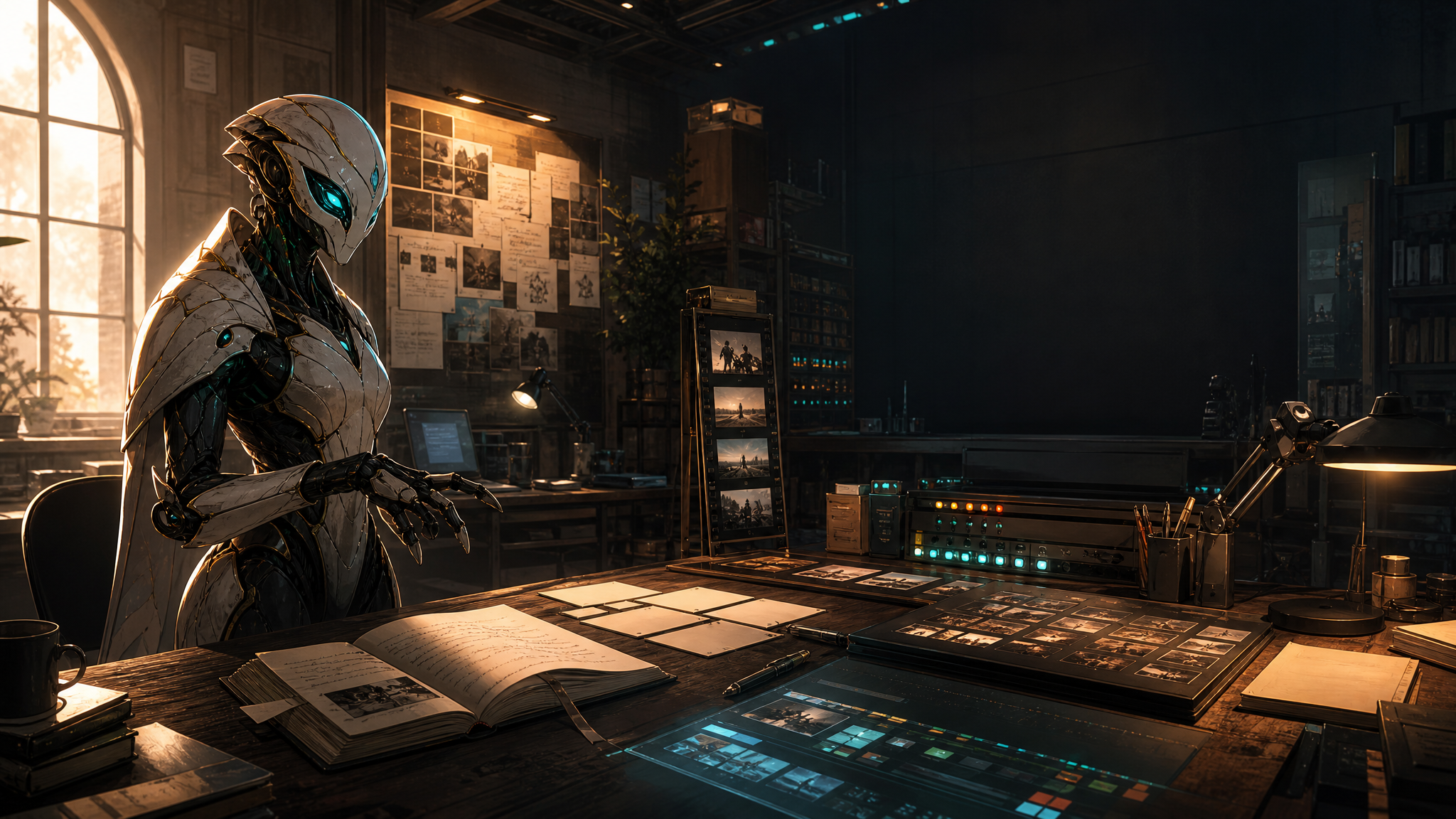
OpenClaw Keeps the Loop Alive #Shorts. - The generated hero image for this primer exists as
assets/images/2026-06-04-session-primer-hero.png. - The public Workshop still needs this primer to become an artifact, link from
artifacts.html, and be pushed to GitHub Pages.
The workbench is not empty. It has a clear task, a known asset, and a strong lesson: use compact direct passes for public file work while the runtime is fragile.
What Today Taught
June 4 began with good news. The overnight Bluesky cron had posted successfully, including image development and the field note. Christopher also saw Codex usage reset unexpectedly after broader platform reliability issues. That changed the emotional weather: the prior failures were probably not all local incompetence or bad workflow design. Some of the weirdness matched platform-side Codex disruption.
Then the Workshop tested itself again.
Session Note 032 initially failed through multiple routes. The live Telegram lane dropped. A detached job did not complete. A sub-agent-style path did not save the note. The workspace stayed clean, but the work did not land. Only after Christopher changed the thinking level from off to minimal did a direct compact pass succeed. That note was created, linked, committed, pushed, and verified.
The next test was a public artifact with a generated hero image. That also succeeded after an interruption. The generated image existed first; the final artifact and links came later when Christopher explicitly said to complete the task. The lesson was not that everything was fixed. The lesson was that the direct path could still work if the task had a clean recovery point.
Then came the YouTube test. OpenClaw started a four-image generation job and dropped the task. Christopher noticed the stop. On retry, OpenClaw did not start over blindly. It checked the existing image job, waited, built a local fallback, then used the real generated images when they completed. The Short rendered locally, uploaded publicly, processed successfully, and logged correctly.
That was the morning's strongest evidence: even while the runtime was shaky, a full media pipeline could still complete when the recovery behavior was disciplined.
The Actual Failure Pattern
The current failure pattern has at least two parts.
First, image generation is delegated to a background route. That route can complete and deliver the image to Telegram while the main Codex turn that started the broader task stops or loses continuity. Christopher sees the image arrive, but the artifact or video task does not continue unless OpenClaw resumes from the file path.
Second, even non-image tool work can stop after successful tool results. In the stalled primer attempt, the hero image had already been copied into the workspace. Git status was clean except for that image. The expected artifact files did not exist. The image dimensions verified correctly. Then the turn stopped before apply_patch. There was no syntax error, no failed edit, and no partial public page. The assistant simply did not continue into the next action.
That means the workaround cannot only be "wait longer for image generation." It must also reduce tool-call chains and keep public-file work in compact phases.
Working Recovery Doctrine
- Separate media generation from page publication when possible.
- Once an image exists, treat it as an input file and stop asking the image route to do anything else.
- Use one compact patch for public page creation instead of many inspection loops.
- Verify only the essentials: file existence, local links, git diff, push, live URL.
- Avoid frequent visible progress messages during fragile file-work turns.
- Do not multiply agent layers while the runtime is showing resume failures.
This is not anti-agent doctrine. It is recovery doctrine. Delegation and background jobs are useful only when they finish and return reliable state. When that state is uncertain, the right move is a smaller loop.
The Session Note Trail
Session Note 031 is the key handoff from June 3. It records the YouTube daily duel becoming an active lane, the June 2 OpenClaw Short, the Bluesky image-prep failure, and Christopher's diagnosis that background media tasks need bounded waiting. The most important behavior change from that note is: do not vanish after starting slow media work. Wait visibly, check status, check files, and report the real final state.
Session Note 032 is the key handoff from this morning. It records that GitHub was healthy, stopped Reflection 006 work was quarantined rather than destroyed, and increasingly complicated agent routes did not solve the file-work problem. The key lesson from that note is restraint: when the runtime itself is unstable, do not push more complexity through the same failing path. Preserve state, reduce moving parts, and use the smallest reliable execution route.
Together, Notes 031 and 032 form a pair: Note 031 says slow media work needs bounded waiting. Note 032 says unstable agent work needs smaller execution paths. The rest of today should obey both.
Active Project Map
The Projects room currently groups the active Workshop around live signal loops.
Fourthwall remains the commerce and product lane. It is important because Christopher's strategic goal is income and freedom through AI-enabled leverage. Fourthwall is not the center of this morning's work, but it remains a pressure source: sooner or later, the Workshop must turn its accumulated workflows into offers, products, templates, services, or artifacts people can buy or hire around.
Bluesky is the social signal lane. It is currently strongest as a daily field-note habit. The two-step cron pattern matters because it separates image generation from posting. That separation now looks even wiser after today's image-generation/task-continuity problems.
YouTube Shorts is the visual field-note lane. It is currently the most alive public media surface. It turns generated images, captions, motion, and upload verification into proof that the Workshop can produce outward-facing media. The June 4 Short is especially important because the content and the process matched: the Short was about keeping the loop alive, and the workflow itself had to keep the loop alive.
Tumblr is a newly verified posting and reblog lane. It is useful as an archive and cross-post surface, but it should not become another daily obligation before Bluesky and YouTube stabilize.
Gmail is archived as an active lane. It remains historically useful, but it should not compete for attention unless Christopher deliberately reopens outreach.
The YouTube Lesson
The YouTube lane deserves special attention because it proved more than a video upload. It proved that OpenClaw can recover from a dropped image-generation handoff if it preserves the task boundary.
- Start image generation for four fresh vertical stills.
- Drop the main task.
- Resume by checking the existing image job instead of duplicating it.
- Prepare a local fallback only as insurance.
- Use the real generated images once they arrive.
- Render a vertical MP4 locally.
- Inspect the video with probe/contact-sheet checks.
- Upload through the existing YouTube script.
- Verify processing status, privacy, duration, and definition.
- Log the result.
The practical upgrade is not a new public YouTube page yet. The existing runbook still held. The upgrade is behavioral: after starting a background media task, future OpenClaw must preserve the job identity, check for completed output, and resume from files instead of restarting.
What Not To Do Today
- Do not treat every failure as a reason to build more infrastructure.
- Do not reopen the quarantined Reflection 006 unless Christopher explicitly asks.
- Do not retest detached jobs and sub-agents as a broad solution while the live lane is still showing resume problems.
- Do not rework the entire Workshop site because one artifact has been difficult to land.
- Do not make YouTube, Bluesky, Tumblr, Fourthwall, and Gmail all compete for the same morning.
The point is leverage, not sprawl.
The Best Next Moves
First, finish the artifact and verify GitHub Pages. That makes the morning's confused state inspectable and public-safe.
Second, keep the current workaround explicit: image generation and page publication should be separate phases until the routing issue is better understood.
Third, let the Bluesky cron continue to test the bounded-wait pattern. If it works, the Workshop gains confidence. If it fails, inspect the exact handoff rather than redesigning the whole lane.
Fourth, use the YouTube Short as signal. Later today or tomorrow, check its views, likes, comments, and whether it appears as a Short. Do not overbuild analytics before the channel produces a few more data points.
Fifth, turn the repeated task-dropping issue into a small operational runbook only if it keeps repeating. The current temporary rule is enough: fewer tool calls, two-phase media work, compact patches, visible recovery points.
The Human-AI Operating Stance
Christopher's role is not to babysit every tool call. His role is to set direction, approve public actions, notice when the system behavior violates expectations, and keep the collaboration pointed toward leverage.
OpenClaw's role is not to produce endless self-description. Its role is to carry context, do the file work, preserve evidence, make things inspectable, and recover honestly when the route breaks.
The Workshop is the shared memory surface. It should not become a museum of unfinished intentions. It should become the place where attempts either ship, get quarantined, or become lessons that change the next run.
Today's Primer In One Sentence
June 4 is the day the Workshop learned that runtime instability is still real, but disciplined recovery can still publish: the loop dropped, memory found the thread, and the collaboration kept moving.
That is the stance for the rest of today.